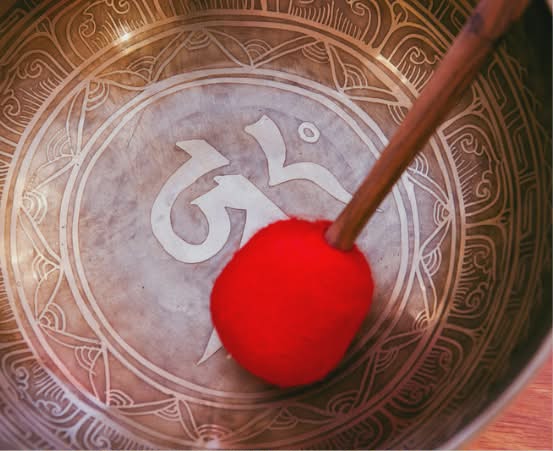




Sound therapy has gained enormous popularity in recent years. More and more people are discovering gongs, Tibetan bowls, tuning forks and sound baths as a way to deeply relax, calm the nervous system and reconnect with their bodies. However, in many online spaces the narrative around sound therapy is often very one-sided — suggesting that sound always heals, always relaxes and always has a positive effect. The reality is more nuanced.
Like any practice that works with the body and mind, sound also requires awareness, knowledge and respect for individual boundaries. This raises an important question: Can sound actually be harmful? The short answer is: in certain situations, yes — it can be too intense or used in a way that does not suit the person experiencing it. This does not mean sound therapy is dangerous. It simply means that, like massage, movement, or meditation, it should be approached with care and sensitivity.
Sound Is Not Just Music — It Is Vibration
To understand why sound can sometimes feel overwhelming, we first need to understand its nature. Sound is not only something we hear. It is primarily vibration that travels through air, space and the body.
The human body is made up of more than 60% water, which makes it an excellent conductor of vibration. This is why during a sound session many people not only hear the instruments but also physically feel the vibration in their bodies. This quality is exactly what makes sound so powerful in regulating the nervous system but it also means that its intensity must be appropriate for the individual.
When Sound Can Feel Too Intense
In therapeutic practice there are several situations in which sound may feel overwhelming or uncomfortable.
1. When the Nervous System Is Already Overstimulated
Many people today live in a state of chronic stress and constant activation of the nervous system. Their bodies are already operating in a heightened state. In these situations: very loud gongs sudden, intense sounds rapid changes in frequency may be experienced by the body as another stimulus, rather than an invitation to relax. The body may respond with: tension restlessness the desire to leave the session. And that response is completely valid.
2. When the Sound Is Too Close to the Body
In some practices instruments are placed very close to participants — for example a gong or large bowl positioned near the head or chest. If the distance is too small and the sound very strong, the vibration may simply be too intense for the body. This is why good sound practice always considers: the distance between instrument and body the volume of the sound the gradual building of intensity.
3. When Strong Emotions
Are Activated Sound has the ability to open emotional space. During sessions some people may experience: deep emotion tears memories emotional release. This is not necessarily negative — in fact it can be a natural part of the process. However, if someone feels overwhelmed or unprepared for such experiences, the session may feel uncomfortable. This is why sound spaces should always be held with gentleness and care.
4. When Someone Is Highly Sensitive to Sensory Stimuli
Some individuals have very sensitive nervous systems. This can include people who are: highly sensitive (HSP) neurodivergent prone to migraines sensitive to loud sound. For them, certain instruments — especially large gongs played very loudly — may be too intense. In these cases, gentler instruments such as: tuning forks, singing bowls, softer percussion may be more appropriate.
The Most Important Principle of Sound Therapy
Good sound therapy is not about intensity, about making the sound louder or stronger. What truly matters is something else: the relationship between sound and the body of the person experiencing it. Sound should be an invitation, not a force. The nervous system responds best to environments that are: predictable calm safe. This is when true relaxation begins.
The Body Always Communicates
One of the most beautiful aspects of working with sound is how clearly the body communicates. When sound is supportive, people often notice: deeper breathing, softening of muscles, a sense of heaviness or grounding, slower thoughts. When sound is too intense, the body may respond with: tension, restlessness, a need to shift position, the urge to open the eyes or move away. These signals are not problems. They are simply information.
This is why it is so important that sound practitioners work with awareness and care.
Responsible practice includes: gradually building intensity
observing the responses of participants
allowing space for silence and integration
reminding participants they can always adjust their position or take a break.
Sound is a powerful tool but its true power lies in subtlety.
Sound itself is neither good nor bad. It is simply vibration. In the right context it can deeply support the nervous system and help the body return to balance. At the same time — like any practice involving the body — it requires awareness, experience and respect for individual boundaries. Because the most important part of sound therapy is not the instrument, but the relationship between sound and the person experiencing it. And it is within that relationship that real transformation begins. involving the body — it requires awareness, experience, and respect for individual boundaries. Because the most important part of sound therapy is not the instrument, but relationship between sound and the person experiencing it. And it is within that relationship that real transformation begins.